Pinterest Trends for Pattern Designers: Read It Right
Oct 16, 2026By Mandy Corcoran — surface pattern designer and former tech instructor. I build the tools I teach, including PatternPAL Pro.
How to Use Pinterest Trends to Find Pattern Ideas Before Everyone Else Does
You open Pinterest Trends. You type in a motif. You see a line rocketing straight up the graph.
And you think, Perfect. That’s my next collection.
I get it. I’ve done it too. But here’s the thing nobody tells you about Pinterest Trends: most of us read the data completely backwards. We treat the most impressive part of the graph as the opportunity, when we should be looking somewhere else.
So let’s fix that.
What Is Pinterest Trends (and Why Should Pattern Designers Care)?
Pinterest Trends is a free tool that shows you how search, save, and shopping activity on Pinterest has changed over time. You can look back up to two years, compare regions, and see it all on a simple line graph.
For surface pattern designers, that’s a peek at what buyers are actually looking for. Not what you hope they’re looking for.
It can be a really helpful tool to plan your next design.
If you use it right.
How Do You Search Pinterest Trends?
Before we get into the backwards stuff, here’s how I search:
- Log in to your Pinterest business account. (No business account yet? They’re free and quick to set up.)
- Click the Pinterest logo in the top left corner.
- Choose Search Trends.
- Type in a broad search term to see if a topic is gaining interest.
- Once you find a category that’s moving, start narrowing it down.
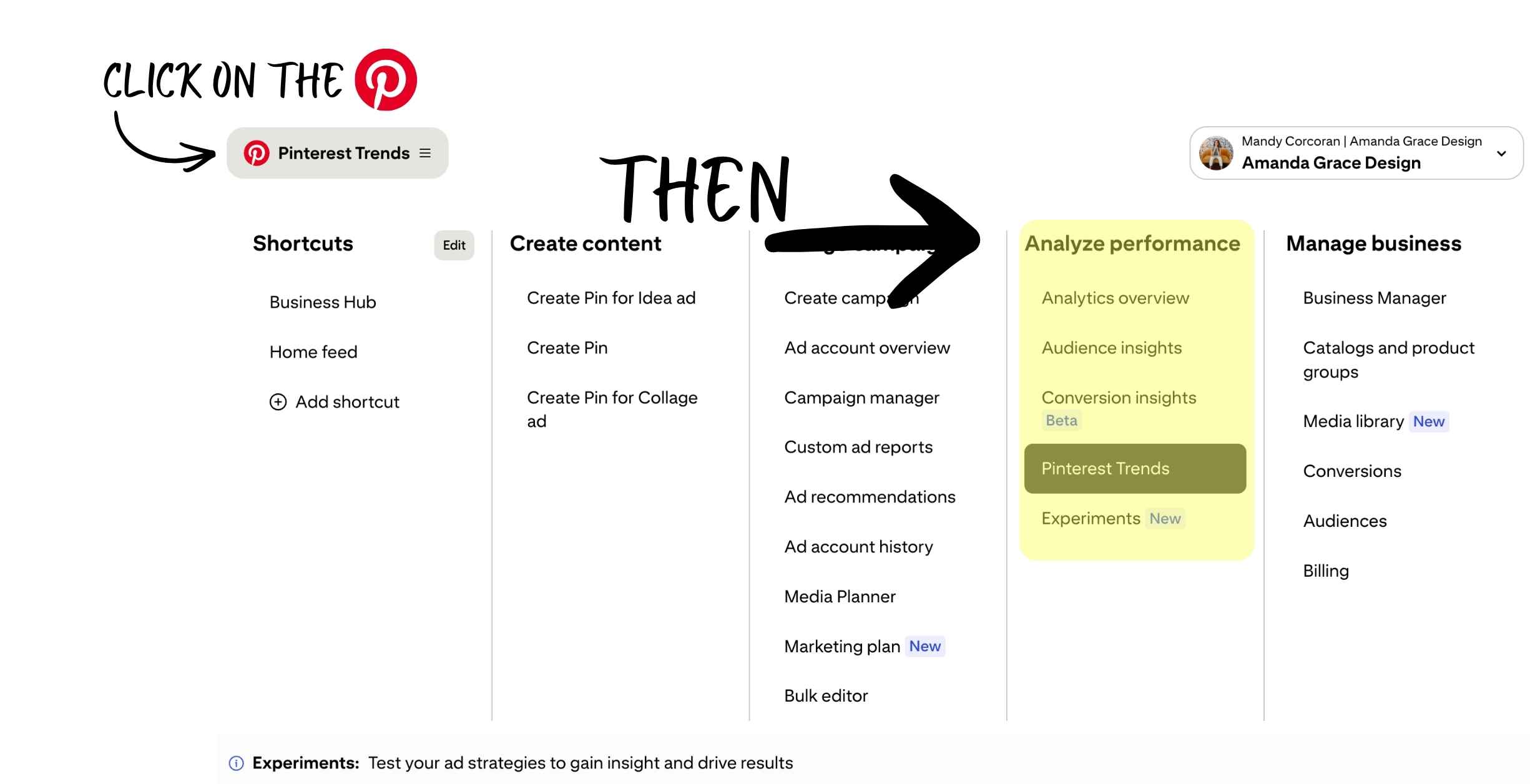
Easy enough. Doing a search isn’t where people get stuck.
Reading the graph is.
Backwards Mistake #1: Chasing the Peak Instead of the Climb
When you search on Pinterest Trends, your eye goes straight to the steep climbs. That’s natural. A steep climb looks exciting.
But a peak isn’t a prediction. It’s a receipt.
By the time a trend is shooting straight up, the market is usually already crowded. Hundreds of thousands of designers saw the same spike you did. (And a bunch of them already uploaded their versions.)
Let’s say you spot a motif going vertical in October. You spend three weeks designing a collection around it. You pitch it in November. You’re now one of a very large crowd, and truthfully, most buyers already have what they need.
The real opportunities sit lower on the graph. You want ideas that are just starting to climb. Small, steady upticks.

Is there still some guessing involved? Sure. But a little bit of research coupled with your personal taste and experience helps you:
- See what your buyers are actually searching for
- Skip spending weeks on a collection built around motifs nobody wants
- Avoid elbowing your way onto a bandwagon that’s already over-full
Backwards Mistake #2: Reading a Broad Term Like It’s a Specific One
Here’s another place the data gets flipped around. You search a big, general word, see it trending, and assume everything in that category is hot.
Nope.
Take cows. Highland cows are everywhere right now. Mugs. Pillows. Dog Halloween costumes. Everywhere.
(Showing my age here, but I remember when the Holstein cow had its moment in the ’90s. Black and white spots on everything. If you remember the Gateway computer boxes, you know exactly what I mean.)
If you search “cow,” you’ll see the topic is trending. Kinda helpful, kinda vague.
Now get specific. Search different kinds of cows and you’ll see Highland cows are the cow of the moment. They’re trending big. Jersey cows are flatlined. Holstein doesn’t even show up.
So if you’d read “cow is trending” and drawn a whole Holstein collection? You’d be designing for 1992.
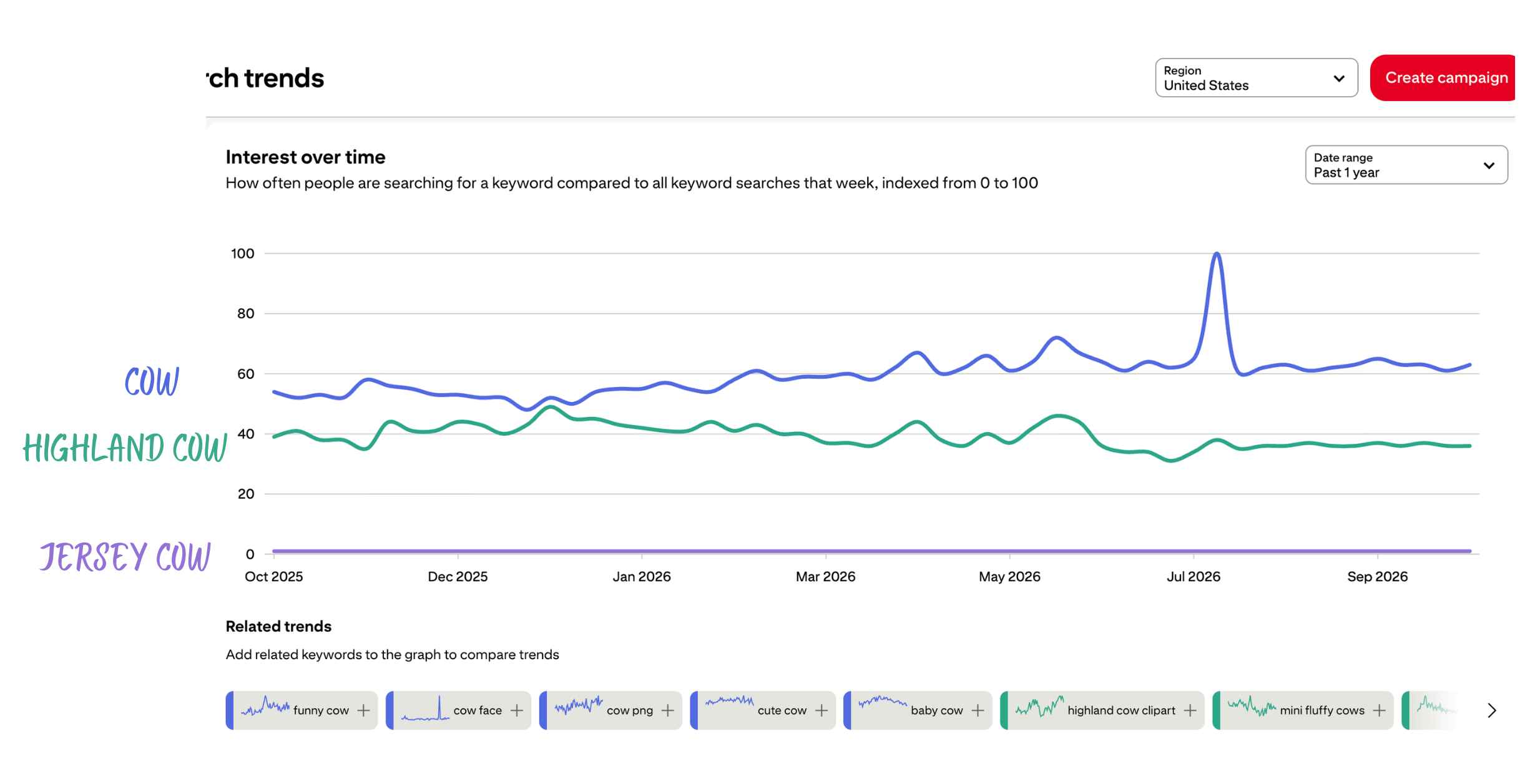
Go broad first, then niche down. Narrowing down is where the useful stuff shows up. The broad term tells you a category is moving. The specific term tells you what is moving.
Backwards Mistake #3: Reacting to Seasonal Climbs Instead of Getting Ahead of Them
When you’re searching seasonal trends, pay attention to the highs and lows across the entire full two years of data Pinterest Trends can give you. Not just the last few months. (It’s really simple and easy to adjust the search window.)
Seasonal topics tend to start climbing around the same time every year. Search “Elf on the Shelf ideas” and you’ll see what I mean. Same hill, same timing, year after year.
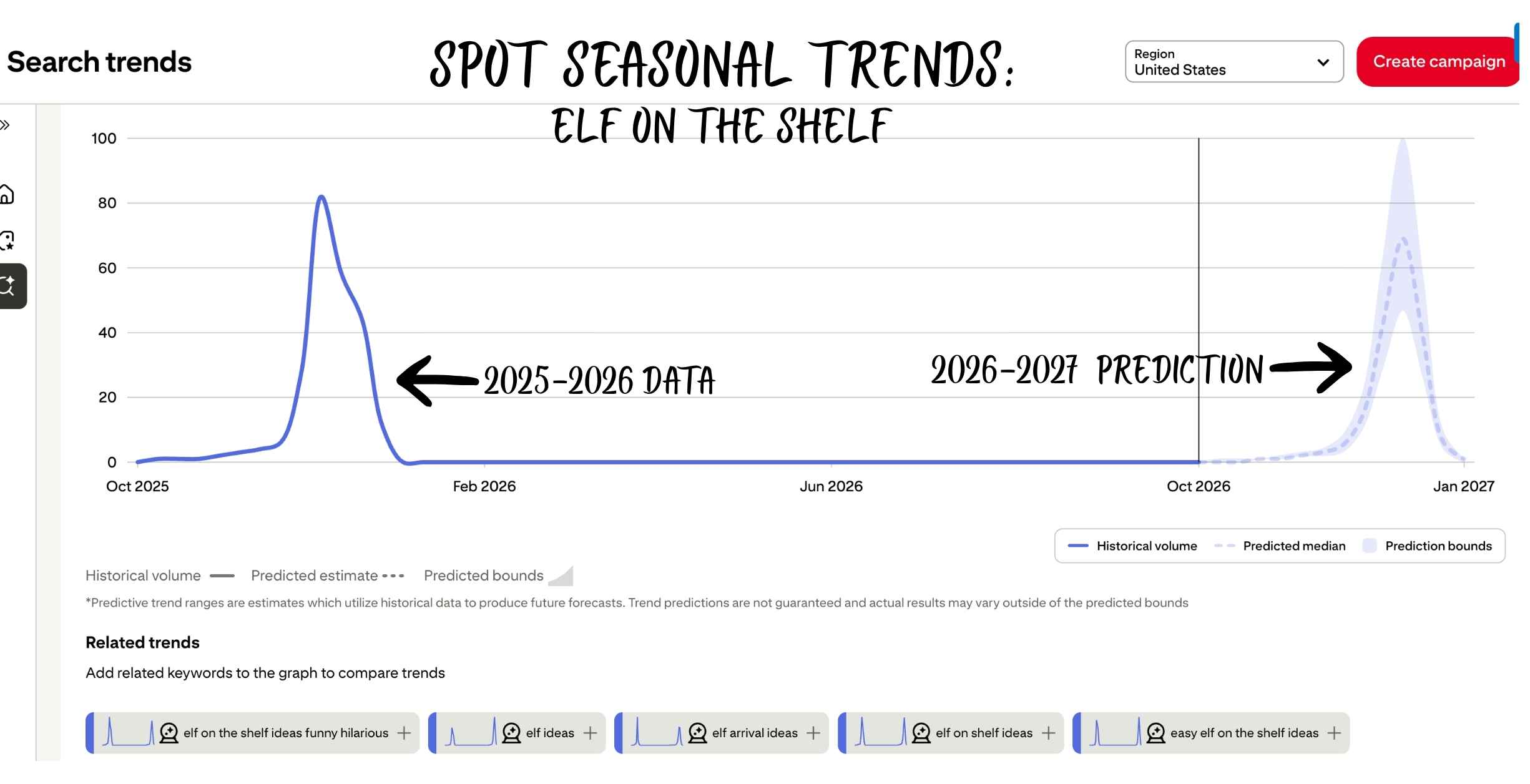
Don’t wait for the climb to start before you start making something.
You’ll be too late. The climb is your deadline, not your starting gun.
So if you’re planning a seasonal freebie or lead magnet around a holiday topic, have it ready before the search interest starts to climb. Not after. Look at last year’s line, find where the hill begins, and back up from there.
Backwards Mistake #4: Treating Every Rising Line Like a To-Do List
Fair warning: Pinterest Trends gives me FOMO sometimes. Every rising line makes me wonder if this is something I should be designing. Is this going to be the next viral trend? The temptation to do all of the things is really hard to ignore somedays.

But remember, the graph isn’t telling you what to make. It’s giving you information so you can decide. If you let the graph call the shots, you’re doing it backwards.
Pinterest search data can’t tell you what every art director or licensing buyer wants. But when you pair it with what you’re seeing during your retail research, it helps you make smarter calls about what to create next year.
Don’t chase all of the ideas. You’re looking for an early read on what people want, so you can make a thoughtful decision about whether it fits your style. That’s it.
If a rising motif doesn’t feel like you, let it go. Someone else will draw it. You’ll draw the thing that actually sells because it looks like your work.
Set a timer if you need to. The rabbit holes are deep.
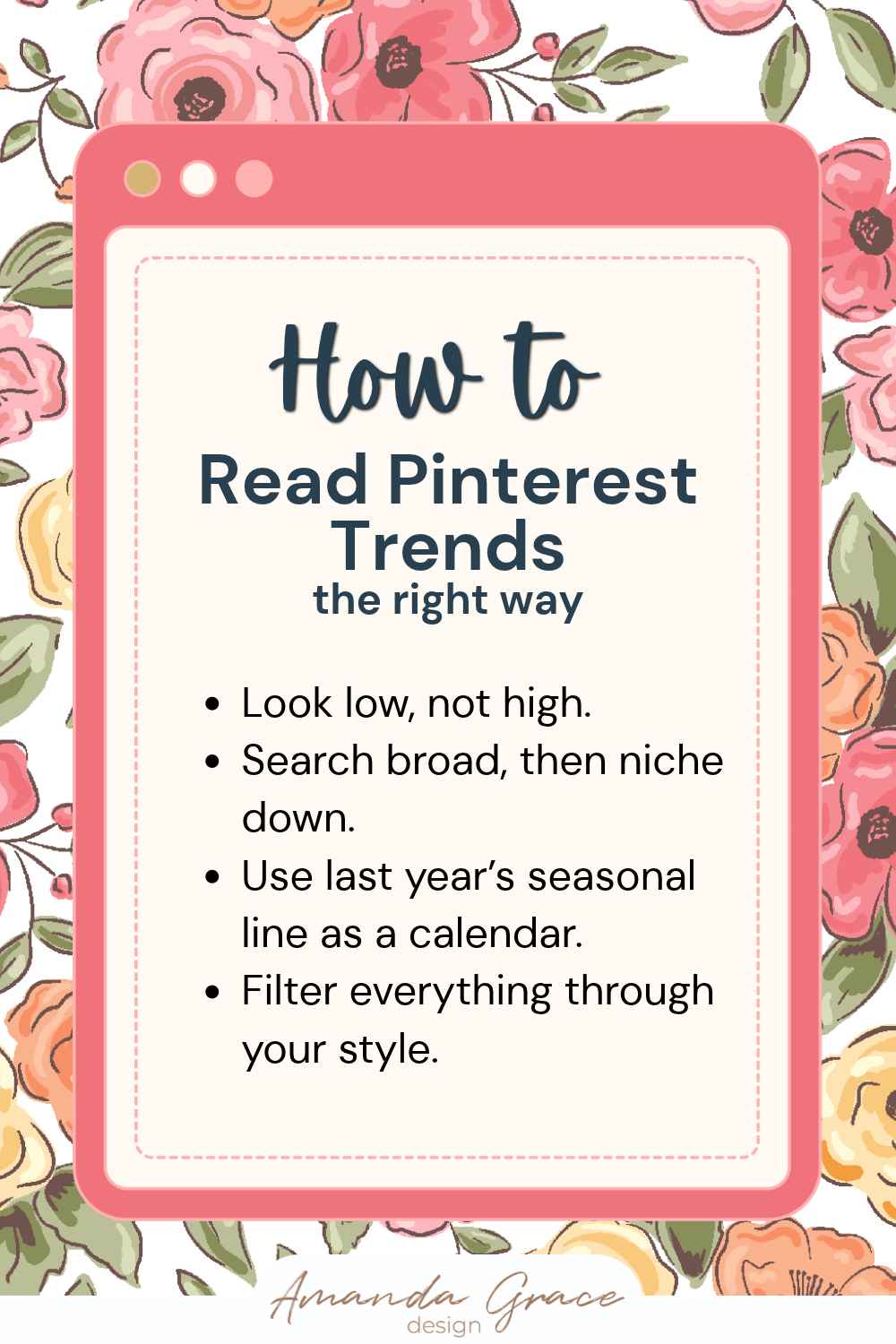
How to Read Pinterest Trends the Right Way (Quick Recap)
If you want the short version, here it is:
- Look low, not high. The early climb is the opportunity. The peak is the crowd.
- Search broad, then niche down. “Cow” tells you a category is moving. “Highland cow” tells you what to draw.
- Use last year’s seasonal line as a calendar. Be ready before the hill starts.
- Filter everything through your style. Data informs the decision. You make it.
Your 30-Minute Trend Plan
Before you close this tab, open your calendar and block off 30 minutes this week. Research five keywords in Pinterest Trends for next year.
For each one, ask: Is this climbing or already peaked? Did I search specific enough? Does it fit my style?
Easy-peasy.
If you liked this post, take a look at How to Use Google Trends. Google Trends is another helpful, free tool you can add to your planning arsenal.
And if you’d like more tips like this one delivered to your inbox, subscribe to my weekly 3, 2, 1, ... Eduletter.