
How to Use Google Trends for Surface Pattern Designers
Aug 12, 2026I’ve designed a lot of patterns because I felt them. That sounds kind of ‘woo woo’ but it’s how a lot of us work. And there’s nothing wrong with that.
It’s fine to draw patterns with colors you love. Motifs you’re into. Things that feel like "you.”
But (you knew there was a but, right?) when you’re a professional pattern designer, success usually means commercial success. Commercial success means drawing what other people are feeling so they buy what you drew.
Skill gets you beautiful patterns. Research gets them sold.
That's Where Google Trends Comes In
Research sounds boring and tedious. Like a high school paper. I’m guessing not a lot of us would ever want to go back to high school. Plus, artists shouldn’t have to do research, right? That’s for data people like scientists and college professors.
Yeah. Well, the bad news is, if you run your own creative business, you’re going to have to look at some data every now and then.
The good news is, Google Trends makes it a lot easier than we had it back in high school. No trips to the library, digging through dusty history books.
Here’s how creative business owners can use Google Trends (for free!). Here is the link to the Google Trends page so you can check it out.
Start With The Market, Not The Motif
Before you type a single word into that Google search bar, back up. Way up.
Don't start with "I drew hydrangeas, are hydrangeas popular?"
Start one level higher, in the world your buyer is actually shopping in. Getting value out of Google Trends is all about asking where buyer attention is headed:
- Home decor: cottagecore, coastal decor, western decor
- Kids: woodland nursery, dinosaur nursery
- Seasonal: fall decor, Christmas fabric
- Weddings: wildflower wedding, garden wedding
- Crafts: quilting fabric, Christmas quilt
Pop 4 to 5 related terms into Trends together, set the location, and pull the timeframe back to five years. You're not looking for a winner. You're looking for shape.
- Is the line steadily trending up? It’s a growing trend worth digging into.
- Is it stable? Could be your evergreen bread and butter.
- Is it seasonal? Fine, as long as you design far enough ahead (more on that in a second).
- Is the line steadily trending down? It’s declining, but that doesn't mean never. It just means if that’s what you’re releasing next, don’t bet on it having viral success.
From Aesthetic To Motif
Let's say English country decor is climbing. Now you drill down.
Test motifs: English garden, wildflower, hydrangea, cottage garden, toile, rabbit.
That gives you real creative intel. It might look like this:
Trend: English country → Related interest: cottage garden → Motifs: foxgloves, roses, strawberries, rabbits → Collection concept: romantic English garden → Products: wallpaper, fabric, table linens
See what happened there? Trends kind of just handed you a full collection brief.
Learn How Your Buyer Actually Talks
I sound like a broken record. But here’s the thing, it’s really important to use terms that your buyers or clients are using.
You might describe your own work as a "small-scale ditsy botanical coordinate." If you’re licensing to a company, the art director might be searching using similar terms. BUT if you’re selling on Etsy or Spoonflower, you better believe your soccer mom customer is typing "tiny flower fabric" into a search bar.
Test near-synonyms against each other: floral pattern vs. flower pattern vs. botanical print. Kids wallpaper vs. children's wallpaper vs. nursery wallpaper. Christmas fabric vs. holiday fabric vs. Christmas quilting fabric. Whichever term is winning is the one that belongs in your Spoonflower title, your Etsy tags, and your Pinterest pin copy.
Hunt The Rising Queries, Not Just The Top Ones
After you search a term, scroll down to Related Topics and Related Queries. Then flip the toggle from Top to Rising.
Top shows you what's already huge (and probably saturated). Rising shows you what's climbing right now. Pay extra attention to anything flagged Breakout.
Don't panic-design the second you spot one, though. Take that phrase and run it through Trends on its own, one branch at a time. Western decor might lead you to cowgirl, then western nursery, then rodeo, then desert western. Each one is its own little research trail.
Run Two Tracks: What To Draw vs. Where It Sells
This is the part I really want you to steal. You want to divide your search into what to draw in terms of motif. And what it’s selling on.
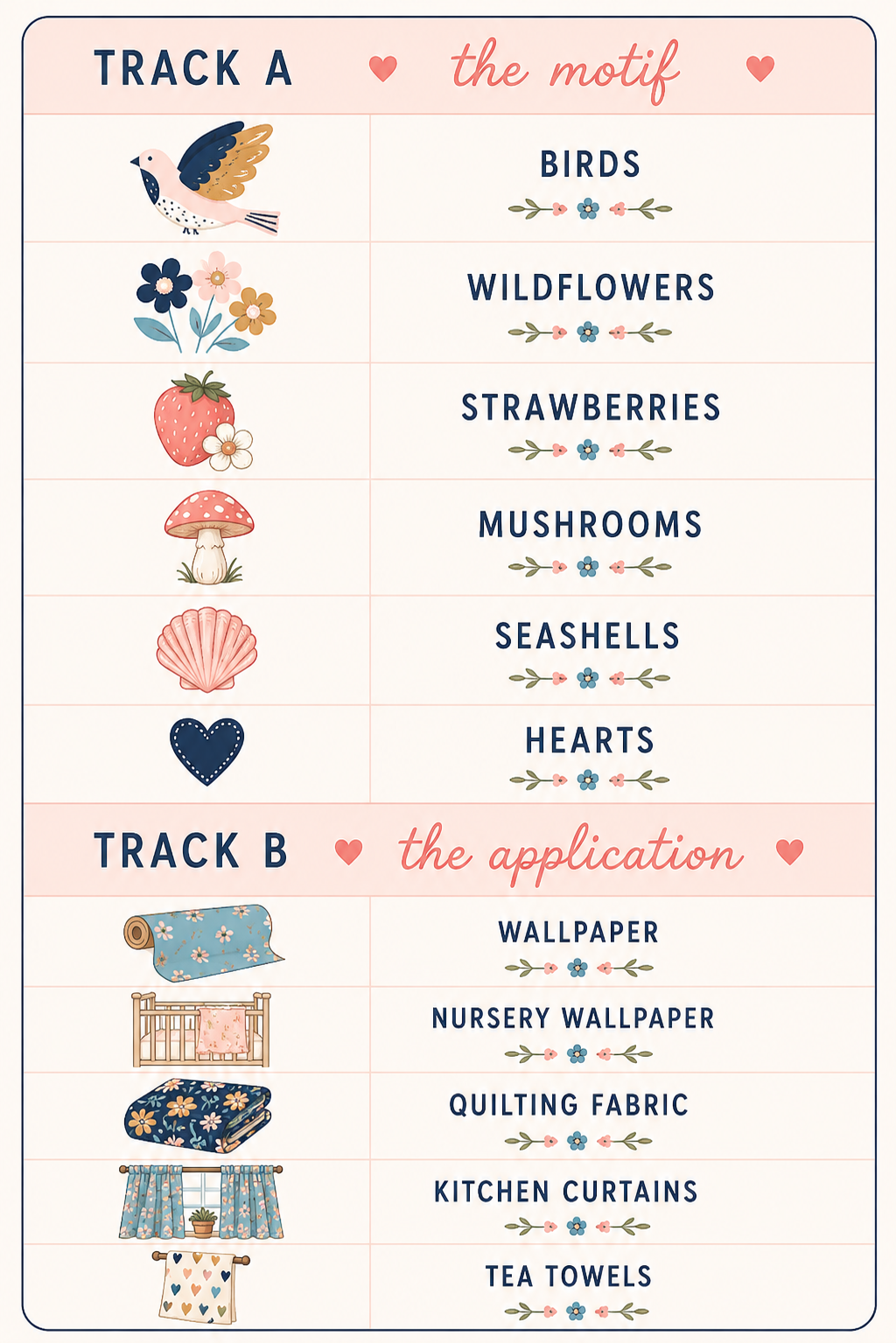
A simple two-track research framework for surface pattern designers: compare popular motifs such as strawberries, mushrooms, wildflowers, seashells, and cherries with product applications like wallpaper, nursery wallpaper, quilting fabric, kitchen curtains, and tea towels to uncover stronger design and keyword opportunities.
If you only search the motif, it can look like it’s not doing much on its own. "Cow pattern" might not show much movement. But if you search "Cow kitchen decor" you might find a breakout. Add the room, the recipient, the occasion and the motif gets you real context.
Build Trend Briefs Easily
It's tempting to just jot down "strawberries = trending" and call it a day. But you can do so much more if you take a few additional steps. Why not build an entire brief?
- Core aesthetic: Cottage garden
- Motifs: strawberries, wildflowers, rabbits, roses
- Colors: butter yellow, sage, dusty blue
- Applications: cottage kitchen, nursery wallpaper, table linens
- Season: spring and summer
- Related aesthetics: English country, cottagecore, grandmillennial
That can make the difference between one lucky pattern and a cohesive body of successful work.
Make the Most of Your Research
Say you discover that "western nursery" is a rising opportunity and you’re really excited about that. So you Design: a sweet Western themed collection. Then you create a Spoonflower or Etsy listing. Maybe create a few Pinterest: pins around "Western Nursery Ideas" or "Cowgirl Bedroom Inspiration." Write a Blog, something like "How To Give Your Baby’s Nursery a Sweet Western Vibe"
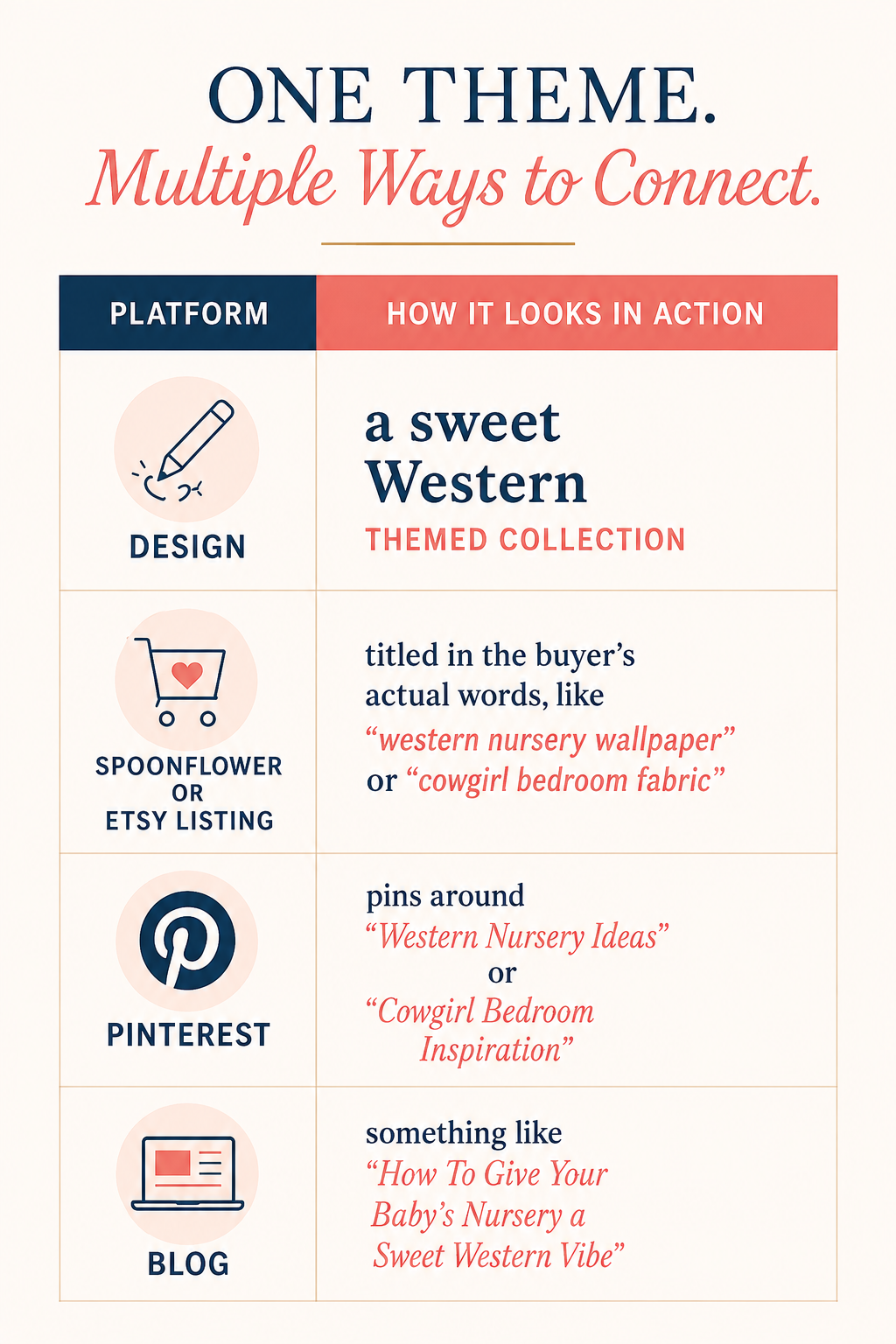
One research session can give you an entire collection and a lot of connected content.
That's the "art meets efficiency" part of what I do, and it's exactly why I built my Pattern Collection Playbook as a free download, it's the framework I use to turn a single trend cluster into a full, sellable collection instead of one lonely pattern.
Your 30-Minute Monthly Routine
The nice part is you really don’t need to spend a ton of time here. Depending on how quickly you design collections, you could spend 5-10 minutes every week checking in or do one big 30-minute audit once a month.
I break it down this way:
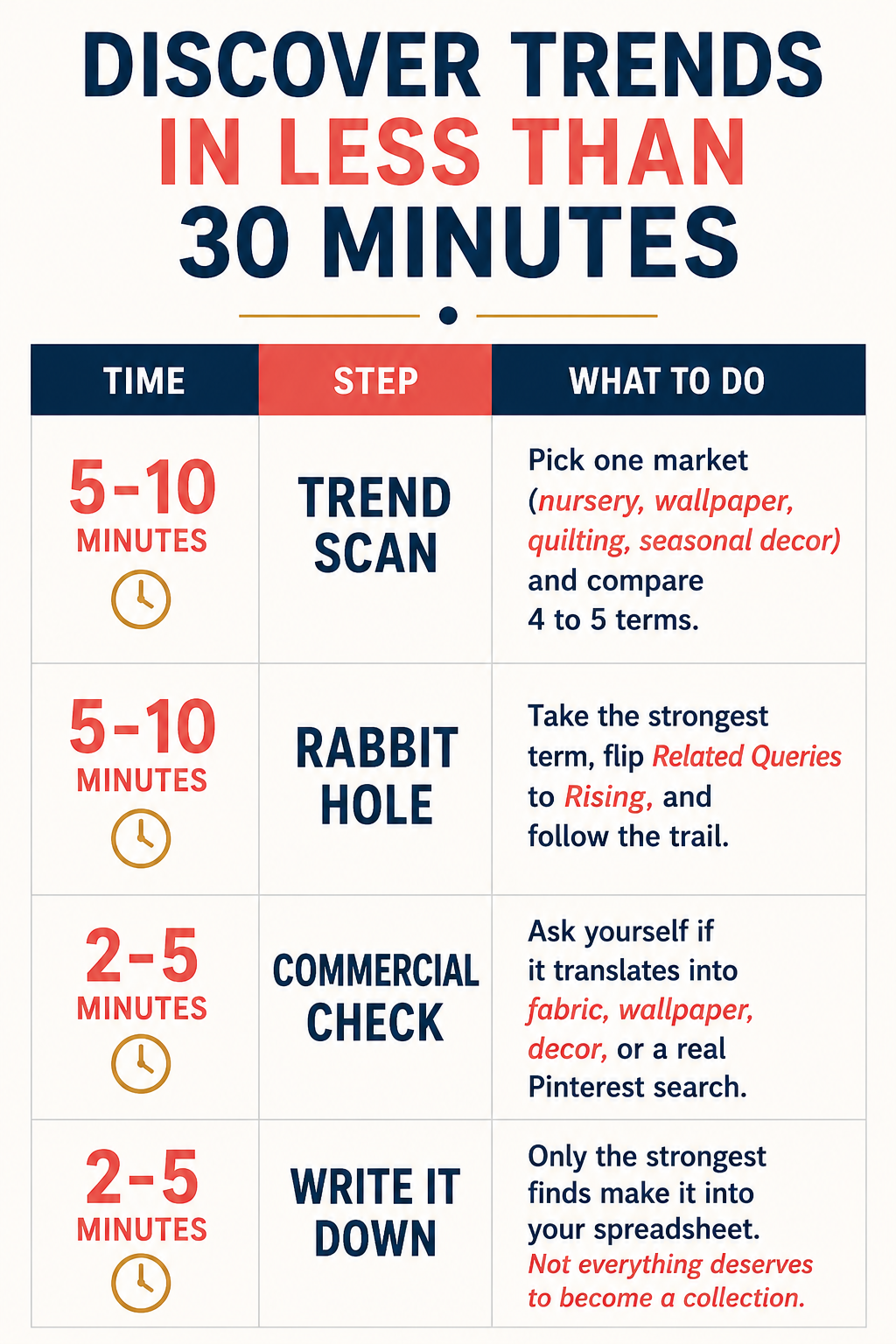 A quick Google Trends research workflow for surface pattern designers: scan promising markets and keywords, explore rising related searches, check each trend for commercial potential in fabric, wallpaper, home decor, or Pinterest, and save only the strongest design opportunities for future pattern collections.
And here's the one rule I'd add to all of this: don't chase spikes, chase intersections. The strongest opportunities aren't just things that are trending. They're where a growing aesthetic, a recognizable motif, a real commercial application, searchable buyer language, and your own artistic identity all overlap at once. That intersection is what makes a collection feel timely without looking like you chased a trend.
If you're interested in minimizing boring business tasks so you can maximize time for your art, take a look at Creative Systems Lab. I do a live-build twice a month with creative business owners - surface pattern designers, illustrators, makers, Etsy and POD shop owners. You can learn to use Claude, the AI assistant, to run the business side while you keep the fun, creative part for yourself.
Every hour you save on the business side is an hour you get back for the art side. That's the kind of math I like.