Why Your Patterns Aren't Profitable (Yet)
Apr 16, 2026So there I was, standing in the bedding aisle at Target. My oldest son needed something new — Easter always kicks me into spring-cleaning mode, and this year that meant dealing with the fact that my kid has officially outgrown the sheets I bought him in 5th grade. He’s outdoorsy, likes muted colors, would tolerate maybe one pattern in his room if I begged. Meanwhile, my youngest daughter? She’d happily sleep under a duvet with seven coordinating prints.
I stood there, surrounded by sheet sets, and my designer brain did that thing it does. Because this — this moment, right here — is exactly what I try to explain to designers about knowing who you’re designing for.
Let me show you what I mean.
Each Market Has Its Own Rules (Nobody Tells You This)
Most designers start out making patterns they love and then go looking for somewhere to submit them. Which is fine when you’re finding your footing. But if you want to move from hobby to pro, you have to flip that around and design intentionally — for a specific market, with specific rules.
And the rules are different depending on where those patterns are going to live.
Quilting fabric and home decor fabric might come off the same printer, but the collections behind them operate on totally different logic. Different sizes. Different roles. Different math.

If you’ve been submitting the same 4-pattern collection everywhere and wondering why it’s not landing, stay with me.
Meet Aunt Millie, Your Quilter Ideal Client Avatar (ICA)
Aunt Millie is quirky. She loves her extended family almost as much as she loves doing puzzles, and she considers a fabric collection a kind of puzzle in itself.
Even if Aunt Millie isn’t your specific quilter ICA, she’s close enough that you need to know her. Because if you’re designing for quilters, you’re not designing a capsule collection — you’re designing a toolkit.
What Quilters Actually Need
- 8 to 20 patterns in a single collection.
- A range of scales (large hero prints all the way down to tiny tonals).
- Plenty of blenders — those lower-contrast prints that rest the eye between bold patterns.
- Enough color overlap that Aunt Millie can cut anything into anything and have it still look cohesive.
Aunt Millie loves mixing, matching, cutting, and piecing. Your collection has to give her enough variety to work with across a whole quilt — otherwise it’s like handing her a jigsaw with half the pieces missing. She won’t buy it. She won’t even consider it.
Now Meet Inez, Your Home Decor ICA
Inez works in home decor. She’s not shopping for herself — she’s shopping for a client who wants their living room to look pulled-together and intentional.
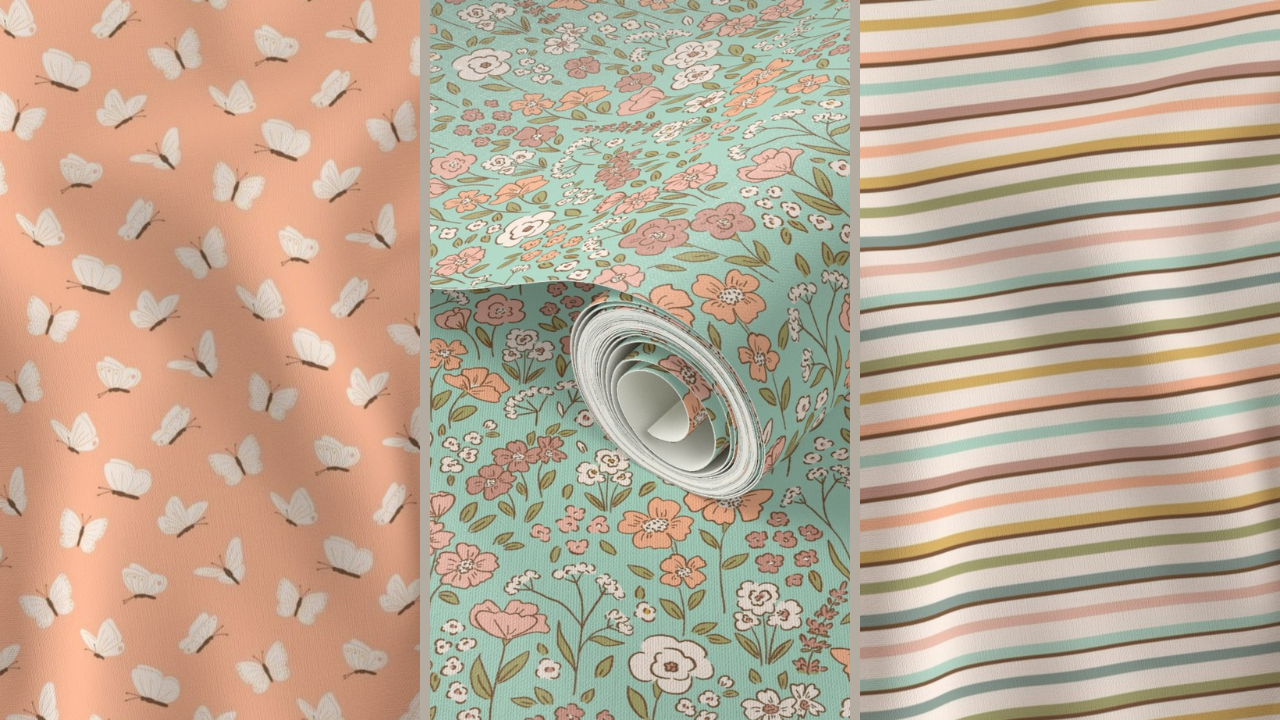
What does Inez need? One bold print to play hero, and a few coordinates that compliment it without competing. Three patterns total. Four, max.
It makes sense when you think about it. Home decor patterns get placed across different objects in a room — a throw pillow here, a set of curtains there, a duvet on the bed, maybe some wallpaper if Inez is feeling fancy. Four coordinating patterns is plenty when each one is getting its own surface.
What Home Decor Buyers Actually Need
- One strong hero pattern (the statement)
- 2–3 coordinates that support the hero without fighting it
- Tight color cohesion — every print pulling from the same palette
- A clear aesthetic “feel” across the collection, not a variety pack
Same fabric. Same printer. Completely different collection math.
What’s the Right Collection Size for a Beginner?
This is probably the question you actually came here for, so here’s the direct answer:
Your collection size is determined by your market — not your comfort level, not your timeline, and definitely not how many patterns you happened to finish this month.
If you want quilting: plan for 8–12 patterns minimum, with scale variation and blenders baked in. If you want home decor: plan for about 4-6 patterns with one clear hero. If you want stationery or print-on-demand, the numbers shift again.
You don’t need more tools — you need clarity on who you’re designing for.

And that starts with knowing your Ideal Customer as a person, not as a demographic checkbox.
If you haven’t developed your Ideal Customer Avatar yet, I built a free email course for exactly this. It walks you through the steps to actually get to know your ICA — not as a target market, but as a real human being. It’s called Master the ABCs of Your Art Biz, and it’s free.
Why Designing Without an ICA Wastes Your Best Art
Real talk — I spent the first few years of my pattern career making what I thought was beautiful work and then wondering why it wasn’t selling.
The art was fine. The problem was I was making 4-pattern mini-collections and pitching them to quilting markets that needed 12. Or building sprawling 15-pattern sets and trying to place them in home decor, where a buyer was looking for a clean, tight group of 4.
It was a collection-size mismatch. And it cost me years of unnecessary rejection before I clocked what was happening.
Nobody tells you this part out loud.
Market research sounds so corporate and so not creative. But getting to know your ICA — really know her — is one of the most creative acts you’ll do in your whole business. You have an imagination. Most designers are better at this than the spreadsheet people. You just have to actually try it.
Before You Build Your Next Collection, Ask This
When I’m starting a new collection, I run through these questions before I even open Procreate or Photoshop:
- Who is this collection actually for? (Give her a name. Give her a life.)
- What market is she buying in? (Quilting? Home decor? Stationery? Apparel?)
- What collection size does that market expect? (Check recent collections from designers who are winning there.)
- What role does each pattern play? (Hero? Coordinate? Blender? Tonal?)
- Does my palette hold up across every pattern? (Every print should look like it came from the same conversation.)
If you can’t answer those five questions before you start designing, you’re going to end up with a beautiful set of patterns that don’t have a home.
If you’re making patterns in Procreate and you want a step-by-step system for building collections that actually hold together — hero, coordinates, blenders, cohesive palette, the whole thing — that’s exactly what I teach inside the Procreate Pattern Collection Masterclass. I built it because I don’t want anyone spending another year designing for nobody.
Alright, Let’s Bring It Home
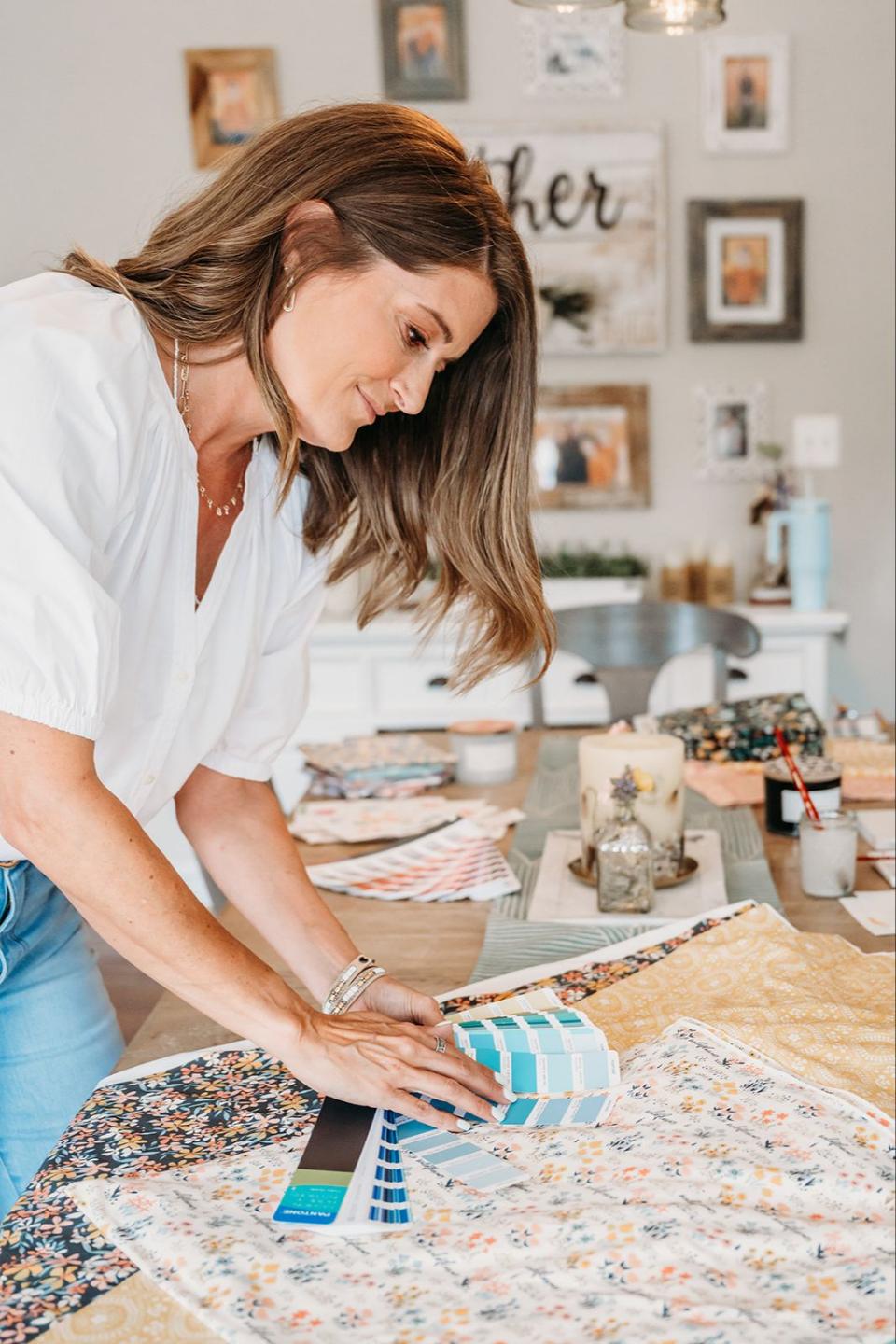
Aunt Millie is out there right now with fabric swatches spread across her dining room table, dreaming about the quilt she’s going to make for her niece. She needs 12 patterns and a lot of range.
Inez is on a design call with a client who just moved into a farmhouse and her client is overwhelmed. She needs 3 patterns that feel peaceful and calm and cozy.
Both of them are worth designing for. Just not with the same collection.
Pick a market. Get to know the person buying in it. Build the collection she actually needs — that’s how patterns stop falling flat.